
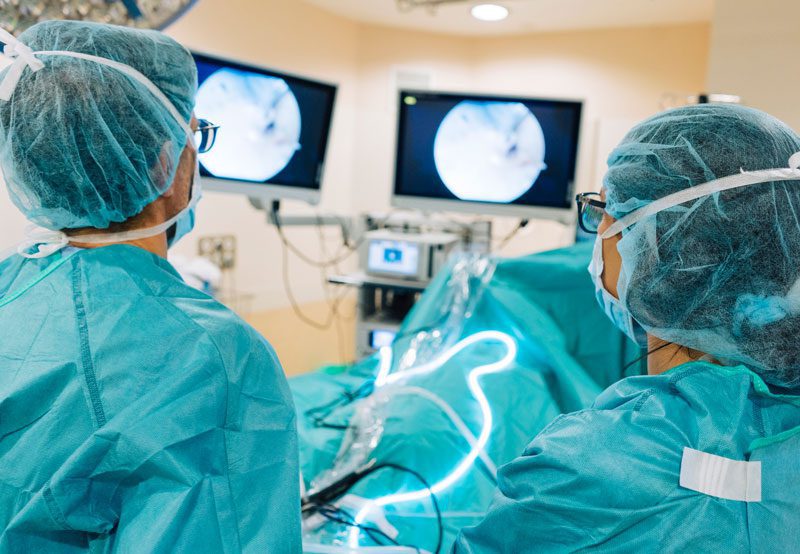
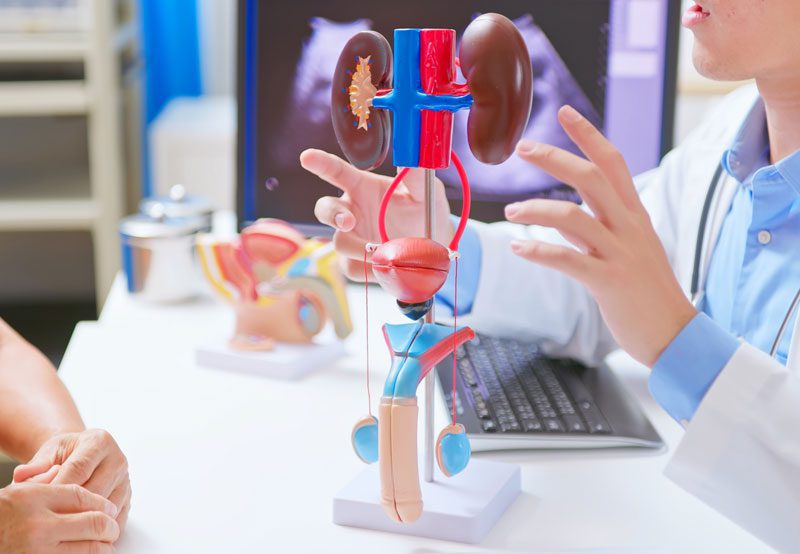
Blue light cystoscopy is an advanced diagnostic procedure used to improve detection of bladder cancer and abnormal bladder tissue. Before the procedure, a specialized solution is placed into the bladder, where it is absorbed more readily by certain abnormal cells. During cystoscopy, the bladder is examined under both standard white light and blue light, allowing suspicious areas to fluoresce and become easier to identify. This technology can help detect tumors that may be difficult to see with standard cystoscopy alone.
What It Treats
Blue light cystoscopy is primarily used in the evaluation and management of bladder cancer, including:
- Non-muscle-invasive bladder cancer
- Recurrent bladder tumors
- Carcinoma in situ (CIS): Flat, high-grade lesions that may be difficult to detect
- Abnormal urine cytology with unclear source
- Surveillance after prior bladder cancer treatment
- More complete tumor mapping before resection
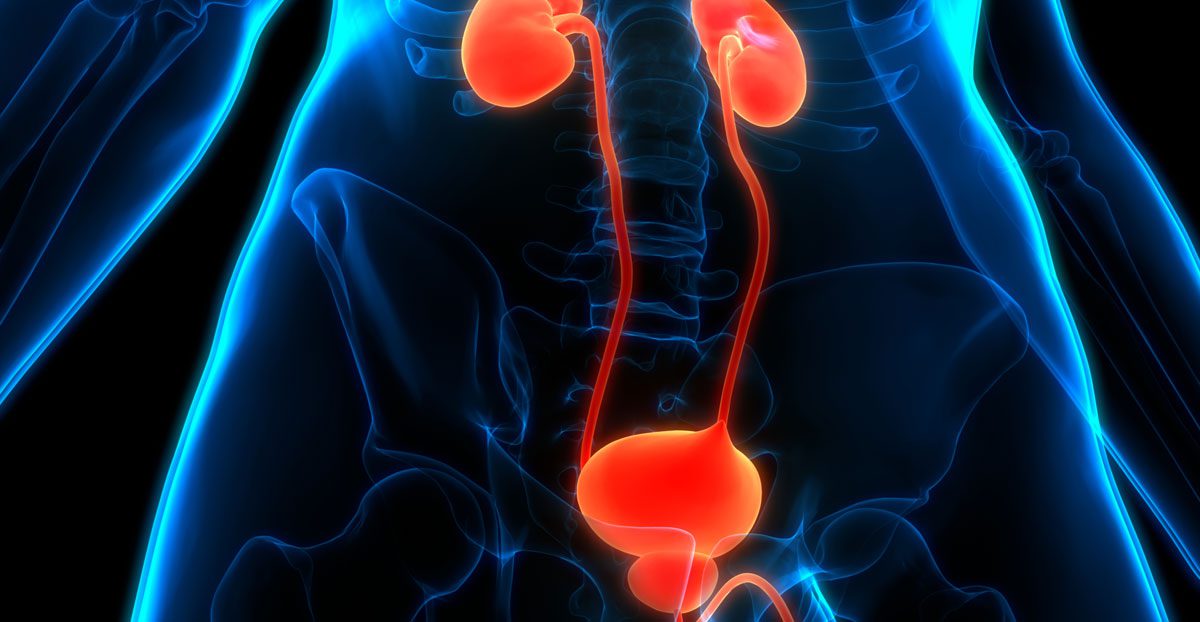
How the Procedure Works
A light-sensitive solution is placed into the bladder through a catheter prior to the procedure. The solution is allowed time to be absorbed by bladder lining cells. During cystoscopy, a small camera is inserted through the urethra into the bladder.
The bladder is then examined using:
- White light: Standard visualization of the bladder lining
- Blue light: Causes certain abnormal cells to glow pink or red, highlighting suspicious tissue
If abnormal areas are seen, biopsy or transurethral resection of bladder tumor (TURBT) may be performed during the same procedure.
Benefits of the Procedure
Blue light cystoscopy may offer several important advantages:
- Improved detection of small or flat bladder tumors
- Better identification of carcinoma in situ
- More complete tumor removal during TURBT
- Reduced chance of missed lesions compared with white light alone
- Helpful surveillance tool in selected high-risk patients
- Supports treatment planning based on more accurate visualization
What to Expect
Blue light cystoscopy may be performed in an outpatient surgery center or hospital setting. Depending on the procedure, local anesthesia, sedation, or general anesthesia may be used. Mild burning with urination, urinary frequency, or small amounts of blood in the urine may occur temporarily afterward. Recovery depends on whether biopsies or tumor resection are also performed.
Is It Right for You?
Blue light cystoscopy may be recommended for patients with known bladder cancer, suspected recurrent tumors, abnormal urine cytology, or high-risk disease requiring careful surveillance. A urologist can determine whether this technology may improve diagnosis or treatment in an individual case.