
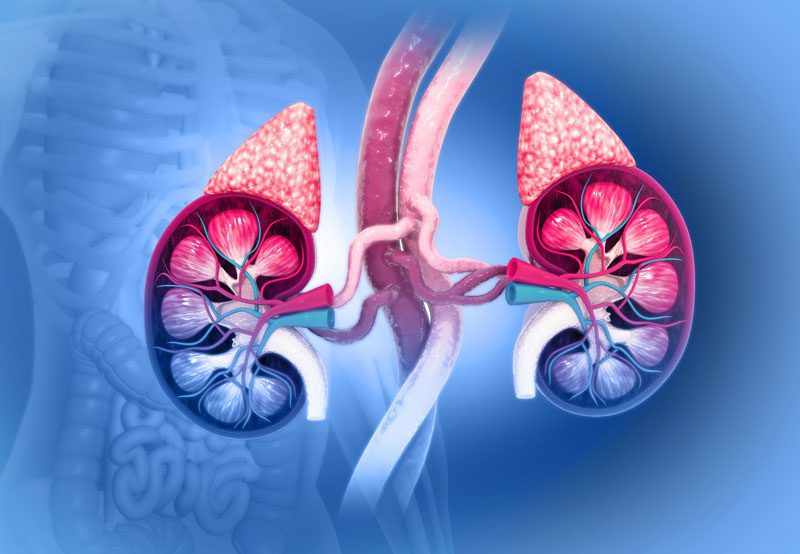

Adrenal cancer and adrenal masses refer to abnormal growths involving the adrenal glands, which are small glands located above each kidney. These glands produce hormones that help regulate metabolism, blood pressure, stress response, and electrolyte balance. Many adrenal masses are discovered incidentally during imaging performed for other reasons and are often benign. However, some masses produce excess hormones or represent primary adrenal cancer, metastatic disease, or other conditions that require treatment. Careful evaluation is important to determine whether monitoring or intervention is appropriate.
Causes
Adrenal masses can develop from several different conditions, including:
- Benign adrenal adenoma: Common noncancerous tumor that may or may not produce hormones
- Adrenocortical carcinoma: Rare primary adrenal cancer arising from the adrenal cortex
- Pheochromocytoma: Tumor of adrenal medulla cells that can release excess catecholamines
- Metastatic cancer: Spread of cancer from another organ to the adrenal gland
- Adrenal cyst or hemorrhage: Fluid-filled lesions or bleeding into the gland
- Hyperplasia: Enlargement of adrenal tissue associated with hormone imbalance
- Inherited syndromes: Certain genetic conditions can increase tumor risk

Symptoms
Some adrenal masses cause no symptoms and are found incidentally. When symptoms occur, they may relate to hormone excess or tumor size:
- High blood pressure
- Unexplained weight gain or weight loss
- Muscle weakness
- Elevated blood sugar
- Easy bruising or skin changes
- Rapid heartbeat, sweating, or headaches
- Abdominal, flank, or back pain
- Fullness or pressure from a larger mass
- Fatigue
Diagnosis
Evaluation focuses on determining whether the mass is benign or malignant and whether it is producing hormones. Common testing includes:
- CT scan or MRI: Defines size, appearance, and local involvement
- Hormone testing: Blood and urine studies for cortisol, aldosterone, catecholamines, and related hormones
- Blood tests: General metabolic and kidney function evaluation
- PET scan: Used in selected higher-risk cases
- Biopsy: Reserved for specific situations, especially suspected metastatic disease
Treatment Options
Treatment depends on the size, imaging features, hormone activity, and diagnosis:
- Observation: Small benign-appearing nonfunctioning masses may be monitored with imaging and lab follow-up
- Adrenalectomy: Surgical removal of the adrenal gland for suspicious, enlarging, symptomatic, or hormone-producing masses
- Minimally invasive surgery: Laparoscopic or robotic approaches for selected cases
- Open surgery: Often recommended for larger or invasive adrenal cancers
- Medical management: Medications to control hormone excess before or after treatment
- Oncologic therapy: Chemotherapy or other systemic treatment for advanced adrenal cancer or metastatic disease
When to See a Specialist
Patients with an adrenal mass, unexplained hormone abnormalities, resistant high blood pressure, or imaging suspicious for cancer should be evaluated by a specialist experienced in adrenal disorders. Early assessment can clarify whether a lesion is harmless or requires treatment and helps guide safe, individualized care.